
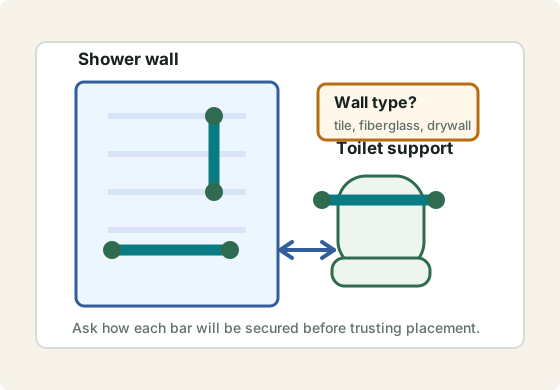
A grab bar request is ready when placement and wall type are clear
Grab Bar Installation Providers helps you decide which home details, limits, and provider questions matter before a senior home safety quote request.
Ask for provider responses after you can identify where support is needed, how many bars may be involved, what the wall surface is, and whether tile, backing, patching, or multiple rooms could affect the work.
What matters most
- Good for: Planning grab bar placement before someone drills into the wall.
- Have ready: Bathroom photos, wall surface, number of bars, support points, and who will use them.
- Ask next: How each bar will be secured and what happens if tile, backing, or wall repair is needed.
- Use the page as planning support, not as a quote, inspection, medical decision, code decision, or provider verification.
- Source context includes HomeGuide grab bar installation cost guide.
- Variations and edge cases depend on the home layout, timing, local rules, product fit, and the person using the space.
When to pause and get local help
- If the project affects health, transfer safety, structure, electrical work, plumbing, permits, or urgent access, then treat this page as preparation and get qualified local review.
- If photos, measurements, timing, or location are missing, then the next step is to collect details before comparing quotes.
- If a provider, sponsor, badge, directory label, or public-source listing appears, then verify license, insurance, written terms, contract, and local fit yourself.
How to read the main choices
| Situation | What to collect | What it means |
|---|---|---|
| Simple support point | One or two bars and clear wall conditions. | Confirm anchoring method, hardware, cleanup, and appointment minimums. |
| Tile or fiberglass bathroom | The wall surface could crack, flex, or need special anchors. | Ask about backing, tile risk, patching, and what happens if placement changes. |
| Multiple rooms or transfer support | Bars are part of a broader movement path or caregiver concern. | Ask whether a bathroom specialist or broader home safety review is better. |
Bring these details into the conversation
- Name the main route, room, support point, or project type that creates the daily problem.
- Collect wide photos, close-up photos, rough measurements, timeline, city and state, and any access limits.
- Separate quick fixes from quote-worthy work, then ask what could change after an in-home review.
- Avoid sending medical records, financial documents, Social Security numbers, passwords, or unnecessary private details.
If two paths both seem plausible
If two options seem possible, such as a ramp versus a stairlift or grab bars versus a larger bathroom change, then start with the daily movement problem, collect the basic measurements, and ask a qualified provider which variation fits the home before treating any range as a real quote.
Start with details the first conversation can use
You do not need a complete diagnosis. You need enough detail for a qualified provider to understand the home, the timing, and what could change after an in-home review.
Tile, fiberglass, drywall, stone, or unknown backing.
Where the person enters, turns, stands, sits, and reaches.
Number of bars, rooms involved, hardware, patching, and cleanup.
Where this usually connects
If this page is close to your situation, Grab bar cost guide can help with the immediate next step, while DIY vs professional grab bars gives useful context before you compare provider answers.
This service page uses public cost context and a wall-condition checklist to reduce low-quality provider calls.
What to include in a request
List shower, tub, toilet, hallway, or bedroom locations. Note tile, fiberglass, drywall, stone, or unknown wall conditions.
Provider fit questions
Ask how the bar will be anchored, whether hardware is included, and what happens if the wall needs backing or repair.
When not to overcomplicate it
If the job is one standard bar into clear studs, a qualified handyman may be enough. Complex tile or multiple bathrooms may need a specialist.
Grab bar provider fit table
| Option | Fits when | Watch for |
|---|---|---|
| Simple support point | One or two bars and clear wall conditions. | Confirm anchoring method, hardware, cleanup, and appointment minimums. |
| Tile or fiberglass bathroom | The wall surface could crack, flex, or need special anchors. | Ask about backing, tile risk, patching, and what happens if placement changes. |
| Multiple rooms or transfer support | Bars are part of a broader movement path or caregiver concern. | Ask whether a bathroom specialist or broader home safety review is better. |
Before you request quotes
- Bathroom or room locations
- Wall surface and backing if known
- Number of likely bars
- Main movement needing support
- Tile, patching, and cleanup questions
What people usually ask next
What should I tell a grab bar installer first?
Describe where support is needed, the wall surface, likely number of bars, and whether the bar is for light balance support or major transfer support.
Is professional grab bar installation always necessary?
Not always, but unknown backing, tile, fiberglass, transfer support, or multiple rooms usually justify asking a qualified installer how each bar will be secured.
What changes a grab bar quote?
Wall type, backing, number of bars, hardware, patching, tile risk, travel minimums, and whether several rooms are involved can change the quote.
Ask questions that reveal the real scope
These questions help you compare answers without relying on memory after several calls.
- What is included in the first written scope, and what commonly becomes extra after inspection?
- Which details do you need from photos or measurements before deciding whether this is a fit?
- Who performs the work, who supervises it, and who handles service or written service terms questions later?
- What would make this project slower, more expensive, or inappropriate for this home?
Public sources reviewed
What this page cannot decide for you
- A planning guide cannot inspect the home, confirm local code, verify provider quality, or judge medical suitability.
- Treat cost ranges and decision tables as preparation tools, not final prices or professional advice.
- Before hiring, verify licenses, insurance, permits, contracts, written service terms, and local requirements with the provider or authority that applies to the actual scope.