
Start with details the first conversation can use
You do not need a complete diagnosis. You need enough detail for a qualified provider to understand the home, the timing, and what could change after an in-home review.
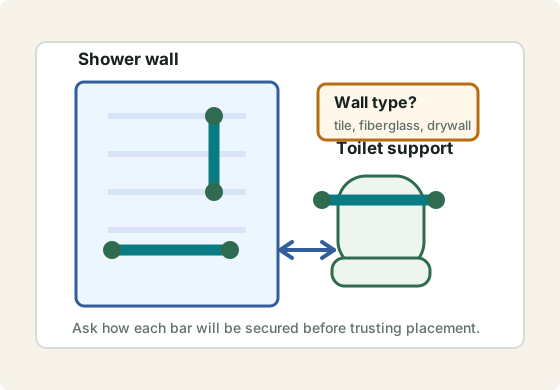
Tile, fiberglass, drywall, stone, or unknown backing.
Where the person enters, turns, stands, sits, and reaches.
Number of bars, rooms involved, hardware, patching, and cleanup.
Where this usually connects
If this page is close to your situation, Grab bar cost guide can help with the immediate next step, while Grab bar service page gives useful context before you compare provider answers.
Placement guidance is a provider-question checklist, not construction instruction.
User movement
Describe how the person enters the shower, stands from the toilet, reaches towels, and moves from bedroom to bathroom.
Wall conditions
Ask whether studs, blocking, tile, fiberglass, drywall, or specialty anchors affect placement.
Quote scope
Ask whether hardware, patching, tile risk, multiple rooms, and cleanup are included.
Ask questions that reveal the real scope
These questions help you compare answers without relying on memory after several calls.
- What is included in the first written scope, and what commonly becomes extra after inspection?
- Which details do you need from photos or measurements before deciding whether this is a fit?
- Who performs the work, who supervises it, and who handles service or written service terms questions later?
- What would make this project slower, more expensive, or inappropriate for this home?
Public sources reviewed
What this page cannot decide for you
- A planning guide cannot inspect the home, confirm local code, verify provider quality, or judge medical suitability.
- Treat cost ranges and decision tables as preparation tools, not final prices or professional advice.
- Before hiring, verify licenses, insurance, permits, contracts, written service terms, and local requirements with the provider or authority that applies to the actual scope.