
Measure rise before you choose a ramp type
Wheelchair Ramp Slope And Space Planning helps you decide which home details, limits, and provider questions matter before a senior home safety quote request.
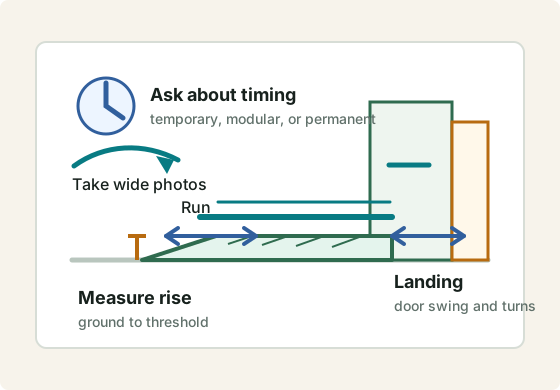
Ramp feasibility starts with vertical rise, available route, landing space, turns, door swing, and whether the need is temporary or permanent. ADA public-design standards are useful planning references, but private residential work still needs local review.
What matters most
- Good for: Checking whether an entry ramp is realistic before you price materials.
- Have ready: Entry rise, door swing, landing space, photos from both sides, and temporary or permanent timing.
- Ask next: Whether landings, handrails, permits, drainage, rental, or removal are included.
- Use the page as planning support, not as a quote, inspection, medical decision, code decision, or provider verification.
- Source context includes Angi wheelchair ramp cost guide, HomeGuide wheelchair ramp cost guide, 2010 ADA Standards for Accessible Design: ramps.
- Variations and edge cases depend on the home layout, timing, local rules, product fit, and the person using the space.
When to pause and get local help
- If the project affects health, transfer safety, structure, electrical work, plumbing, permits, or urgent access, then treat this page as preparation and get qualified local review.
- If photos, measurements, timing, or location are missing, then the next step is to collect details before comparing quotes.
- If a provider, sponsor, badge, directory label, or public-source listing appears, then verify license, insurance, written terms, contract, and local fit yourself.
How to read the main choices
| Situation | What to collect | What it means |
|---|---|---|
| Quote-ready request | Photos, rough measurements, timing, location, and budget band are available. | A provider can decide whether the request fits before an in-home review. |
| Planning-only request | Project type, measurements, or home conditions are still unclear. | Use the checklist and collect more details before comparing providers. |
| Safety or suitability concern | Medical, structural, electrical, plumbing, permit, or urgent fall-risk questions are involved. | Confirm the scope with a qualified local professional before relying on a plan. |
Bring these details into the conversation
- Name the main route, room, support point, or project type that creates the daily problem.
- Collect wide photos, close-up photos, rough measurements, timeline, city and state, and any access limits.
- Separate quick fixes from quote-worthy work, then ask what could change after an in-home review.
- Avoid sending medical records, financial documents, Social Security numbers, passwords, or unnecessary private details.
If two paths both seem plausible
If two options seem possible, such as a ramp versus a stairlift or grab bars versus a larger bathroom change, then start with the daily movement problem, collect the basic measurements, and ask a qualified provider which variation fits the home before treating any range as a real quote.
Start with details the first conversation can use
You do not need a complete diagnosis. You need enough detail for a qualified provider to understand the home, the timing, and what could change after an in-home review.
Vertical height from ground or landing to the entry threshold.
Door swing, landing space, turns, drainage, surface, and handrail needs.
Temporary recovery, rental, removable modular, or permanent access.
Where this usually connects
If this page is close to your situation, Ramp cost guide can help with the immediate next step, while Ramp provider page gives useful context before you compare provider answers.
This page uses ADA ramp standards as a public planning reference, while warning that private residential projects need local review.
Measure the rise
Measure from the walking surface to the threshold or landing. Ask a provider how that rise translates into route length, landings, and turns.
Check the route
Look for driveway conflicts, door swing, porch space, drainage, steps, handrail needs, and room for a caregiver to move.
Local review
Private homes may not be governed by the same rules as public accommodations, but local building, HOA, and safety requirements still matter.
Ramp checks before a provider visit
Measure the height from walking surface to threshold and photograph the full route from both directions.
Note porch depth, door swing, handrail needs, turns, drainage, and whether a caregiver needs side-by-side room.
Ask who checks permits, HOA rules, handrails, surface, drainage, and whether a temporary ramp can be removed cleanly.
Before you request quotes
- Entry rise
- Available straight run
- Possible landing area
- Door swing direction
- Drainage and snow/rain exposure
- Temporary or permanent need
What people usually ask next
What is the first measurement for a wheelchair ramp?
Measure the vertical rise from the walking surface to the entry threshold or landing. That rise helps a provider estimate likely route length, landings, and turns.
Can I use ADA ramp standards for a private home?
ADA standards can be useful planning references, but private residential projects may follow different local building, HOA, and safety requirements. Ask the provider what applies locally.
Why does a small entry rise sometimes need a long ramp?
A ramp needs usable slope, landing space, door clearance, and safe turns. A high entry or tight yard can make the route much longer than expected.
When does a temporary ramp make sense?
A temporary or rental ramp may fit when the need is short-term, such as recovery or a visiting family member, and the route can be installed safely without permanent changes.
Ask questions that reveal the real scope
These questions help you compare answers without relying on memory after several calls.
- What is included in the first written scope, and what commonly becomes extra after inspection?
- Which details do you need from photos or measurements before deciding whether this is a fit?
- Who performs the work, who supervises it, and who handles service or written service terms questions later?
- What would make this project slower, more expensive, or inappropriate for this home?
Public sources reviewed
What this page cannot decide for you
- A planning guide cannot inspect the home, confirm local code, verify provider quality, or judge medical suitability.
- Treat cost ranges and decision tables as preparation tools, not final prices or professional advice.
- Before hiring, verify licenses, insurance, permits, contracts, written service terms, and local requirements with the provider or authority that applies to the actual scope.